A Little Bit About Irie How do you describe the Caribbean to someone who hasn't experienced it? That's what I tried to do with my student. You can't describe it - well not really. The pictures you'll see on these pages will not color the sea the right shades of blue, will not allow you to feel the salt air, will not allow you to know the culture of the Caribbean. You'll have to go there to enjoy that! These web pages are intended to introduce you to 12 beautiful islands in the Caribbean. The photographs on these pages will allow you to preview some of the sites and people you'll find in the West Indies. These pages will also introduce you to some of the "pirates" you may find there sailing on Windjammer ships.
Taking your homeschool on the road is always an experience. Many people have heard of homeschooling but still ask a lot of questions anyway. Once they find out they are in the middle of your "classroom", they share a wealth of information with your student - especially if he is willing to ask questions.
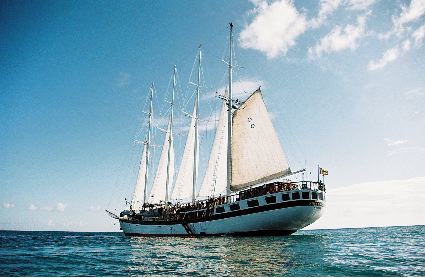
We sailed for 13 days on the S/V Mandalay, one of the prettiest ships I have ever seen. We met some of the most interesting people on this trip, and the best part was that these interesting people were also great pirates! So in part this web site is for them, but it is also our class review of the 13 days we spent in the Caribbean.
 Ship Facts: Mandalay
They say the Mandalay is the queen of the Windjammer fleet. Here's why. It is a 236 foot Barquentine commissioned by E.F. Hutton in 1923.
A Barquentine is a vessel with at least three masts, all of them fore-and-aft rigged, except for the foremost one, which is square rigged. Three-masted barquentines were very common in the Baltic and the North Sea, and three- and four-masted barquentines also sailed on deep-water trades. A number of five-masted barquentines were built, and even some six-masted ones in America. It can be argued that the barquentine belongs to the family of schooners; indeed, in Scandinavian languages the barquentine is referred to as a "schooner ship".
E.F. Hutton sold this beautiful ship in the 1930's because his wife didn't like the size of it and he built a sister ship called the "Sea Cloud", which we saw in Antigua. What's not to like about the Mandalay?
It has a crew of 30, it has 72 berths and a Draft of 15 ft. It's the kind of ship you only see in the movies, but I got to sail on it to some really neat remote Islands.
Grenada
From Grenada's first sighting by Christopher Columbus in 1498 all the way up to 1650 when French settlement began the indigenous Caribs greatly resisted European settlement on Grenada.
For me Grenada was the perfect "intro" to the sights, smells, sounds and the people of the Caribbean. We had a cab driver nicknamed "One Time" he pointed out all different kinds of plants like Cocoa, Nutmeg and this one plant with flowers that had 37 different colors on them! He also showed us the Dasheen plant that Callaloo is made of. He took us to Concord falls and Dougaldston Spice Estate. At the spice estate we saw drying Cocoa Beans, Cinnamon bark and Nutmeg pods. Then we went to Concord falls for a swim and after that we went back to the ship.
 Carriacou - "Land of Many Reefs"
The island of Carriacou has awesome beaches and a pace of life that can only be described as slow motion. There are about 12,000 residents on Carriacou, and half of them are goats! Carriacou has great views of the neighboring Grenadines and a couple of near shore islets of its own that can be visited for picnicking and snorkeling like Sandy Island.
When we were in Carriacou we took the island tour we saw hand made boats, sugar mills and the Carriacou museum that had Carib Indian artifacts. It also housed the artwork of Canute Caliste. His style is "folk art" and feature Island people and local scenery. One of his paintings hangs in the White house. We also learned that there's no local lakes or rivers and that people have to catch the rainwater in their own cisterns to have water for their family and gardens. Carriacou once had sugar cane plantations, but they are now farming fields with a variety of plants for food. One of the sugar cane plantations now hosts a Jazz festival every year. The other beautiful tree that grows here is the Mahogany tree which furniture is made from.
I also learned about more that 100 rum shops in less than 3 sq miles. These rum shops will sell different rums as well as Jack  Iron rum. Jack Iron rum I learned can be used as lighter fluid as I learned from Tuck! Tuck also told me that Jack Iron rum is made in Trinidad and sold throughout the Caribbean. It's the same stuff that Windjammer buys, in Trinidad, for Swizzles. On the Mandalay, they keep the Jack Iron rum on deck in huge barrels. Tuck has a great collection of information about rum if you want to learn more: "Rums of the Caribbean" - about halfway down the page.
After the tour we spent the rest of the day goofing off and snorkeling at Sandy Island (it's really a Sand Spit island!)
 Union Island
Tour Book description of St. Vincent and Grenadines: A multi-island nation well known to wintering yachties, aristocrats and rock stars but off the beaten path for most other visitors. St Vincent is a refreshingly rugged and raw-edged backwater, while the 30 islands and cays that comprise the Grenadines are among the most popular cruising grounds in the Caribbean. The Grenadines reach like stepping stones between St Vincent and Grenada and are surrounded by coral reefs and clear blue waters ideal for diving, snorkeling and boating. Fewer than a dozen are inhabited, and even these are lightly populated and barely developed. Although some of the Grenadines, like Mustique and Palm Island, cater to the rich and famous, others, like Bequia and Union Island, attract an international crew of sea salts and beachcombers and offer decent places to stay and eat.
Union Island was a beach day for us. We walked along the beach and snorkeled a little bit (that's where we saw the flying fish but my web picture is from a book called "Coral Reefs of the Caribbean, The Bahamas and Florida" by Alfonso Silva Lee and Roger E. Dooley I bought in Bequia). It was a rainy day so we basically hung out. My friend Spice and I took on a crab with an attitude. While we were skipping rocks, he came out of the ocean with his pinchers armed! He was not happy that we had invaded his beach! He chased us, then we chased him and we tried to fool him, but he was a smart crab! He eventually retreated to the ocean, quite proud that he had kept his beach free from humans.
I also learned about knot tying along the way. In Bequia, I bought a book called" Knots and Splices" by Cyrus L. Day and I practiced tying knots. Between, Duane, the First Mate, Kevin one of the deckhands and Captain Matt, I learned quite a few really useful knots. If you are interested in seamanship and knots, Tuck sent me some really good links: Boy's Manual Of Seamanship And Gunnery & BOY'S MANUAL OF SEAMANSHIP AND GUNNERY: SECOND I NSTRUCTION SECOND INSTRUCTION
 Mayreau
On Mayreau we hiked to the top of the island and visited the only school on the island where we watched Crystal, the Activities Mate from the Mandalay, play hopscotch with the kids. The School on Mayreau is Mandalay's adopted school. They bring school supplies donated by Windjammer and passengers and other items to the school. We sent some school supplies to the school too.
We also encountered some high school students who were aboard the sailing vessel Spirit of Massachusetts while we were at the school on Mayreau. The Spirit of Massachusetts is a ship used by Outward Bound Hurricane Island School where high school age students can test their mettle sailing in the Caribbean for 90 days. The ship itself is similar to sailing ships that came to the Americas and West Indies in the 1700 & 1800s.
After our stop at the school of Mayreau, we hiked to the other side of the island to Saltwhistle Bay and got something to drink. We saw the cemetry on Mayreau on our hike to Salt Whistle Bay. People live a long time it seems here on Mayreau. Tuck sent me some really good photos of the cemetary and he said I could post them here.
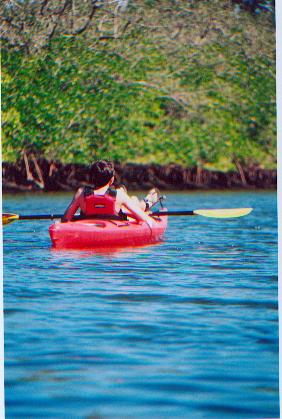
After some pineapple juice and feeling rather lazy we took a water taxi back around the island to where the Mandalay was anchored. For lunch we had a picnic on the beach. The crew went to a lot of trouble to make this picnic happen. They hauled food and grills and tables from the ship to the beach. They were really hard workers. After lunch we went sea kayaking. We got sunburned!
Some things I learned about Mayreau was that it had just gotten electricity within the last two years and that it was a private island owned by the Eustace family until 1915. Eventually it became part of St. Vincent but is still governed by Eustace family heirs. It's a really good place to just get away from it all!!
Tobago Cays
We got into Tobago Cays early in the morning and went ashore before it got crowded. We hiked around a bit and found the fisherman's conch shell depository and found some really cool shells. Then we went to the other side of the island and hiked up to the top of the island and we could see really far! Around eleven o'clock the private yachts started to come in and destroy the calm and peace of the island. Before going back to the ship we walked the beach which was becoming more and more crowed. We saw coral fragments lying on the beach that I decided were broken off by all the boats coming in and not caring about destroying this beautiful place. I think it's good that countries are reserving more and more land for national parks.
 Bequia
We got in to Bequia around dinner-time. Earlier that morning I stumped captain Matt with the question "does Mac's pizza deliver to the ship?" I had the whole ship rocking in laughter but it was a honest question! Apparently they didn't so we went ashore to enjoy some of the best darn pizza on Bequia at Mac's. Right as the pizza was set in front of me Clunk! I fell asleep right in my pizza. We boxed up the best darn pizza with the imprint of my face on it and headed back to the ship. The next morning it was kind of raining but we went to model boat builder shops and to a street festival. After that we went back to the ship for lunch and to get ready for our trip to Moonhole on the southern point of the island.
The trip to Moonhole wasn't a paved road. Most of the way we were bouncing around and watching out for chickens on the road. When we got there it started to rain again but we still had fun. Moonhole is a private house made entirely of rock and into the hillside. But Moonhole is also a sea side arch that during some parts of the year the moon can be seen through it.The original house was right under the arch but a rock fell from the bottom of the arch and fell through the house so they moved up the hill 100 or so feet. You can see the ocean 360 degrees around you. Frigate birds hover around you and the ocean breeze hits you in the face and you know this is bliss. We stopped at the open kitchen and the adults had rum punch and I had fresh limeade. I go to feed the giant turtles who lived there. Our time finally came to an end like all good things do but when I left there I had a new definition of bliss.
St. Vincent
We got into St. Vincent early in the morning after we dropped anchor we had breakfast. The sail to St. Vincent was a rough all night sail. Captain Matt did a great job despite a blown out foresail. The speedboats came to take us to Baleine falls just after breakfast. It was a hour long boat ride. We stopped at some pretty good places. One stop was at a "bat cave" which was a cave that has some interesting formations. Another one of our stops was at the Pirates of the Caribbean set. That was a great movie!
 "The biggest DVD in film history was shot in St.Vincent and the Grenadines.The Ministry of Tourism and Culture of St.Vincent and the Grenadines played host to Disney Films in 2002/2003 for the filming of the box office smash PIRATES OF THE CARIBBEAN. The movie set was built locally at the Ottley Hall Marina and Shipyard and at Wallilabou on the Leeward side of the island.More than half the film was actually shot in SVG".
Along the way was also saw LaSoufriere, St. Vincent's active volcano.
 The waves near the stop for Baleine falls were pretty intense, some of the people on our boat though they were maybe 10 foot waves. It made for an interesting landing. After we landed we hiked up to the falls. It wasn't a paved trail, it was a real jungle hike. We waded though deep pools and streams to get to the actual falls. When we got to the falls, we went swimming and a couple of people in my opinon, who were half crazy, climbed half way up the falls and jumped into the pool below.
After the falls we went to where the actors stayed during the filming of Pirates of the Caribbean at Wallilobou Bay. We had a really good West Indian Lunch. After lunch our speed boat captain took us to a black beach for a swim. The landing was in really deep water and the sand really was black! I brought back a bag of black sand that Tim scooped up for me. The beach was really pretty. It was bordered by Sea Almond Trees that were just starting to bloom pink. After our swim and on our way back to the Mandalay, we were treated to a siting of rare Osprey. (Birds in St. Vincent)
The Osprey, a bird of prey is related to the Hawk and the New World vulture, it is found near water in most parts of the world. American Osprey, or fish hawk, has white underparts and a wingspan of 5 to 6 ft.. It feeds and solely exclusively on all live fish and is usually seen hovering over the water, into which it plunges feet first to grasp its prey.
After our day long adventure to Baleine falls we went back to the ship. Dinner and bed felt really good!
 St. Lucia
When we got into Castries bay in the morning, there was a slight drizzle of rain but even still Captain Matt still moved Mandalay up to the dock perfectly. Since Castries had dock that the Mandalay could pull straight up to, we took on fresh water. While Mandalay was busy with that we went on an 4x4 jeep tour through a banana plantation and a water fall. It might have been drizzling but we still had a great time! While we where on the jeep tour the Mandalay sailed out of Castries to Rodney Bay and at about one o'clock we meet them there and had a late lunch. then the rest of the day we spent messing around in the Rodney bay area.
 Martinique
The highest point is at 1397 m (the Pelée Mountain), in the north. About 390, 000 people live in the Island. The main language is French (and creole which is the local language), but they understand very well English.
 Our day in Martinique was a "town day" we just goofed around town looked in shops. We saw the Martinique library it was very neat inside. There were a lot of old books high up on shelves. I imagined them to be the old leather kind, because we couldn't really pick them up to look. They probably were written in French. I am learning French and my mom reads some French, mostly technical stuff - and food and cookbooks! We think we can get by in French towns!!!
We also saw the Cathedral of St. Louis. It was huge. It was lit by candles and there was singing. It was a peaceful place, more stately than the church we saw on Mayreau, but equal in tranquility.
Our day wasn't with out a mission we had to get French wine for the French wine and Cheese party on the Mandalay. My mom said that the interesting part about that was that when she looked at the selections made by the other passengers, there really weren't many duplicates. That can say that Martinique really had a lot of wine, or each person on the Mandalay was really that unique!!! Mom also bought some Art, Pastis, Chicory and Oh yeah, French Pringles.
Pastis - anise-flavored liqueurs (liqueurs d'anis): This is a category of liqueurs that are flavored with either anise, star anise, or licorice. Examples include anisette and pastis from France, ouzo and mistra from Greece, anesone and sambuca from Italy, anis and ojen from Spain, and kasra from Libya. This is a licorice-flavored liqueur that the French like to serve with water. It's higher in alcohol than anis or anisette.
Beignets and Cafe au Lait (from Emeril) - Cafe au lait is brewed coffee, preferably dark French roast with chicory, with half scalded -- NOT steamed -- milk, poured together from two pots: 6 rounded tablespoons dark roast New Orleans coffee with chicory (Community, French Market, CDM, Union, etc.), 6 cups water, 6 cups milk
DominicaDominica was the last of the Caribbean islands to be colonized by Europeans, due chiefly to the fierce resistance of the native Caribs. France ceded possession to Great Britain in 1763, which made the island a colony in 1805. In 1980, two years after independence, Dominica's fortunes improved when a corrupt and tyrannical administration was replaced by that of Mary Eugenia CHARLES, the first female prime minister in the Caribbean, who remained in office for 15 years. Economy - overview: The economy depends on agriculture and is highly vulnerable to climatic conditions, notably tropical storms. Agriculture, primarily bananas, accounts for 21% of GDP and employs 40% of the labor force. Development of the tourist industry remains difficult because of the rugged coastline, lack of beaches, and the lack of an international airport. Hurricane Luis devastated the country's banana crop in September 1995; tropical storms had wiped out one-quarter of the crop in 1994 as well. The subsequent recovery has been fueled by increases in construction, soap production, and tourist arrivals. The government is attempting to develop an offshore financial industry in order to diversify the island's production base.
We decided to go on a whale watch, but there was another hike you could take to boiling lake. It was an 8 mile strenuous hike, so we'll save that for next time!. I found this link at Google about the boiling lake. It has pictures and stories: http://www.avirtualdominica.com/thelake.htm
 Our morning in Dominica started with a bus ride to town where we spent hal the day the shops were interesting. That afternoon was awesome. We went on a whale watching trip on the way out to the whale migration route we saw 300 to 500 dolphins swimming around our boat we only saw two sperm whales but they and the dolphins made the day one of the best on the trip in my opinion.
 Iles de Saints
Guadeloupe is an archipelago of nine inhabited islands, including Basse-Terre, Grande-Terre, Marie-Galante, La Desirade, Iles des Saintes (2), Saint-Barthelemy, Iles de la Petite Terre, and Saint-Martin (French part of the island of Saint Martin)
Iles de Saints was another French island so of course it had a fort only this one was at the highest point on the island. It was a steep hike and about half way up people started to hitch hike. But our little group (mom, Diane, Tim, Tuck, and me) hiked all the way up. The fort is now a museum so we looked around for about an hour then we went back to town. We got some excellent ice cream then we went shopping. We looked at what felt like every shop on the island then we went back to the ship to goof around. Later that day as we left I went on the widows net off the bowsprit.

Antigua
Antigua was our last island (bummer) so we took the island tour. We saw English Harbor and Nelson's dockyard. In English Harbor we had a tour of the harbor we saw the sail mending loft, the officers' quarters, and the barracks. Today the harbor is home to hundreds of locals boats although the old buildings aren't being used as they once were. The officers' quarters is a museum of the harbor over the years. The barracks, which are now roofless due to a fire years ago, are now a bar and picnic tables. The day was very warm and calm but I sad because I knew it was the last day of being around the wonderful people on the ship and that we would have to say goodbye.
We also saw the Sea Cloud the Mandalay's sister ship. The Mandalay in my opinion looks far superior with her wood decks and her charm.
Antigua was the perfect wrap up for a perfect trip and I can't wait to go on the Mandalay again!
 , is a story about an incident that happened during WWII. The Kid, in a conclusion essay, had decided to focus on an interesting character in the story, Captain Queeg, (a YouTube Video) and on the classic question one always asks about this novel, was Queeg's sanity questionable? I had my all time favorite Herman Wouk story with me, Don't Stop the Carnival: A Novel.
  This is a story about changes in attitudes and changes in latitudes, a theme I am rather fond of.
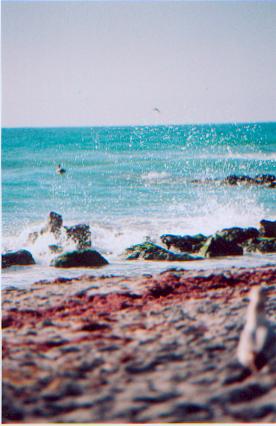


 The real Caribbean is one you won't ever see from a cruise ship. The Windjammer fleet is rare and so are the attitudes aboard. Shipmates are just as interested in the real Caribbean as we are and that's what I like about sailing like this. You are on a huge, beautiful antique sailing ship with other sailing nuts going places only sailors - and - pirates know about.

 It was hot in Statia, remember it was February, and we snowbirds were very happy to be there. In the morning, I got to explore by myself, a rare treat. The Kid was interested in the book he was reading...I suppose that's what I get for raising a bookworm...sigh. But it gave me the opportunity to get to know the island on my own. There is a museum on Statia that is filled with very awesome artifacts and documents of the long and colorful history of this island. The day we were on the island, one of the local schools was having a bake sale...good, good, good - if you like coconut.


 Just to start our adventure off early, we flew to St. Maarten 3 days prior to getting on the SV Polynesia. The last time I was in St. Maarten was almost 20 years ago and boy have things changed. The airport is no longer an open air shack on an airstrip (even going to St. Maarten they verify that you have your sun tan lotion squirreled away in 3.5 ounce bottles now).
 We rented a car in St. Maarten because The Kid just didn’t understand why I thought it was one of the more beautiful places I had been. Our plan for that day was to drive around the island and have lunch at Captain Oliver’s, and that’s what we did. With a map that we should have saved as a collectors item, we started out. “How can we get lost on and island?” The Kid wanted to know. “I don’t want to drive by the cool stuff, so pay attention to the map.” My attempt to get a map reading lesson in for the day.

 We went to the


 DAY 3
DAY 3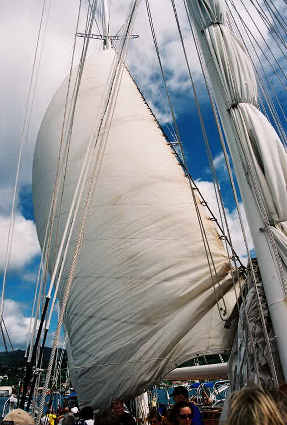


 Life
as a homeschooler and in constant daily contact with a highly gifted student
brings an energy I can't explain, yet drains me; makes me think about
things in a new way, yet causes me to stick with tried and true methods;
makes me strive for accomplishing all the tasks I need to, yet causes
me to think forward to the time my student will go to bed and I can have
a cup of tea and listen to Jimmy Buffet in peace and quiet. Eclectic.
That's the description of the path I am enjoying on my journey right now.
Eclectic is also our homeschool "style". We do what works. We
dig in the dirt or the beach sand, we kayak on rivers, we read, we travel.....
Life
as a homeschooler and in constant daily contact with a highly gifted student
brings an energy I can't explain, yet drains me; makes me think about
things in a new way, yet causes me to stick with tried and true methods;
makes me strive for accomplishing all the tasks I need to, yet causes
me to think forward to the time my student will go to bed and I can have
a cup of tea and listen to Jimmy Buffet in peace and quiet. Eclectic.
That's the description of the path I am enjoying on my journey right now.
Eclectic is also our homeschool "style". We do what works. We
dig in the dirt or the beach sand, we kayak on rivers, we read, we travel.....