Showing posts with label Florida. Show all posts

Saturday, February 23, 2008

The Caine Mutiny and Other Snowbird Pursuits - Florida 2008

I guess it would be appropriate to elaborate on the title I chose for these three previous entries.

As a Sophomore, The Kid has been reading some books that require a little more thought than usual. Herman Wouk, another one of my favorite authors is a great story weaver and this trip to Florida we took 2 Herman Wouk books with us. One The Kid was reading, The Caine Mutiny: A Novel, is a story about an incident that happened during WWII. The Kid, in a conclusion essay, had decided to focus on an interesting character in the story, Captain Queeg, (a YouTube Video) and on the classic question one always asks about this novel, was Queeg's sanity questionable? I had my all time favorite Herman Wouk story with me, Don't Stop the Carnival: A Novel. This is a story about changes in attitudes and changes in latitudes, a theme I am rather fond of.

Rarely do we travel without purpose, and this year our trip to Florida was to kayak, but also to read these great books.

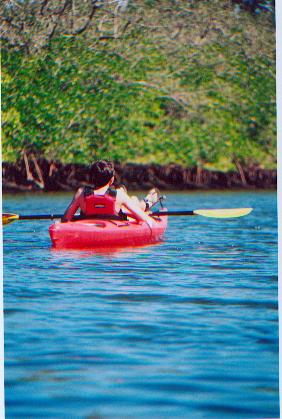
Our Kayak adventures in Southern Florida included a passage across the intracostal waterway to Don Pedro Island. This island is only accessible by boat and worth the effort.


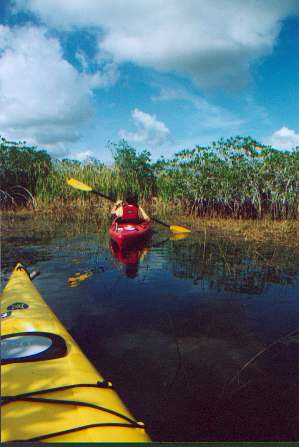
A quite paddle on Red Lake near Caspersen beach. Red Lake is a home to abundant wildlife and if you're not careful, can dump you out into a very busy Florida intercostal waterway!

And after all the reading and paddling, we took time to walk the famous "sharktooth" beach.
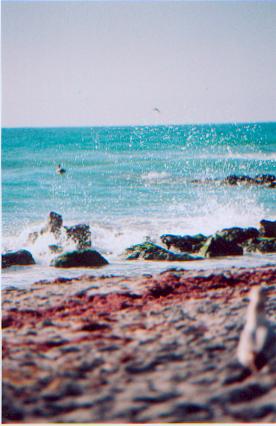

Caspersen beach is where you can find sharks teeth on the beach. It used to be that you could find thousands in a walk, now you're lucky to find one. The word is out!

Tuesday, February 13, 2007

It's Good to Be Sunburnt and Greek

One of the really wonderful things about homeschooling and travel is that you get all that great socialization, especially if you are willing to participate in local cultural events.

We went to the Greek Festival in Sarasota, Florida over the weekend. More precisely it was called the Greek Glendi - A Greek Festival hosted by St. Barbara Greek Orthodox Church. According to the program brochure we received, they were celebrating the music of Greece, which fits perfectly with our recent music studies.

There was a lot of music and dancing, with explanations of many of the dances.The St. Barbara Hellenic Dancers were in colorful costumes that showed authentic Greek history and culture. Every Greek costume is an interesting combination of garment and accessories that is characteristic of a group of people who live in a particular region of Greece. According to the narrator at the festival, there are songs for washing sowing, harvesting - there are love songs, lullabies and laments.

The Greek Orthodox Church evolved in the era of the Great Byzantine Empire, for those of you not up on the middle ages. Byzantine chanting is where a lot of the songs we heard came from. These songs were full of melody and harmony. The folk music of Greece claims a history that is long and checkered and worthy of every homeschoolers attention. Popular music commonly known as Bouzouki music possesses unique characteristics that existed in parts of Greece, yesterday and today. The emotions of the Greek people show through in the dances and and in the music we saw and heard.

Greek architecture is a study in itself. Some say the Greeks invented architecture. Anybody who saw the movie "My Big Fat Greek Wedding" understands that sort of enthusiasm for anything Greek. But most Greek Orthodox Churches I have seen so far in our travels are pretty interesting structures and this building in Sarasota is no different. A beautiful dome amidst Palms and Banyon trees adorned with Spanish Moss. If you're interested, you can go inside these churches and see many beautiful icons, lots of candles and gold ornamentation.

Though the music and the architecture are part of the "study" of local culture, at a Greek festival, in our book, the food is always the attraction. Greek pastries and food are the best "fast food" you can get in my opinion. There's nothing better than a Gyro and Baklava and a stroll through the other food and crafts booths. Church festivals always seem to guarantee that homemade touch and the little old Greek Florida ladies were out in force at this one for sure....though none of them had key lime pies on hand...

At the Greek Market

Greek Jewelry

Greek Shaws


Sunday, February 12, 2006

Beef Jerky, Hells Bay and the River of Grass

"Everglades has no single feature, no prominent point of interest now or ever. It is a mosaic of many things seen, smelled, heard and endured."

Daniel Beard - first superintendent of Everglades National Park

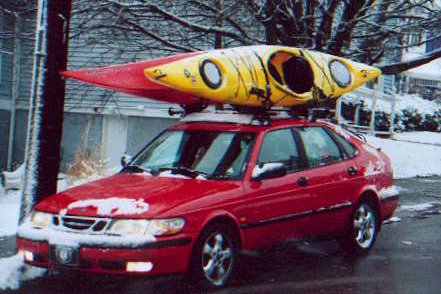
You start out in a midwest snowstorm and end up in Florida packing nothing but beef jerky, cut-offs, sunscreen, red and yellow kayaks. Travel is great when you do it this way. Homeschooling on the road. Beef jerky at it’s finest, "Catcher in the Rye" for reading and the thoughts of a new adventure.

A drive on the single road through Everglades National Park does not reveal the beauty and magic you can find there. We spent 2 days kayaking in this amazing place and left feeling like we explored only a very small bit of this river of grass.

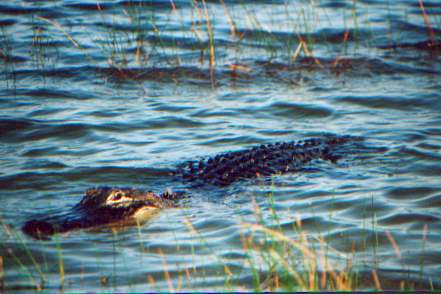
The Everglades offer some pretty good kayaking spots like “Hells Bay” , “Noble Hammock”, “Nine Mile Loop”, “Mud Lake Loop”, “Bear Lake Canal”, “West Lake”. All come with the caution: “Tides and winds can significantly affect your trip. Do Not overestimate your abilities”. They ought to add “Don’t worry about the alligators - they don’t bite.”


The Native Americans named this place “The River of Grass”. We chose three trails, Hells Bay was one of tightly woven mangroves, West Lake was rough and wavey and a lot of “Need for Speed” fun, but the Nine Mile Loop is where you understand why the original inhabitants named this place the “River of Grass”. The description for this trail reads: “A scenic trail through a shallow sawgrass marsh with scattered islands of mangroves. Watch for alligators, wading birds, and an occasional eagle. Trail marked with numbered white poles. Motors prohibited.” It’s 5.2 miles and takes roughtly 5 1/2 hours to paddle - leisurely. There are 116 trail markers to be exact and it is one of the neatest paddles we have done yet.

Florida Everglades Information

Saturday, December 17, 2005

Alligators That Eat Boney Teenagers

“Let’s go kayaking in the Everglades.”
“ The alligators will eat us. “

“When I wanted to camp at Yellowstone you told me that the bears would get us. When I wanted to go kayaking in Canada you told me that the wolves would get us. As you can see we are still here, one of us very skinny, the other one of us a healthy middle ager. Besides, alligators wouldn’t mess with you, there’s not enough meat on your bones.”
“Sigh.”

I think our trip to the Everglades will happen. We have been talking about going back to Cabbage key with our kayaks, the Everglades are just a bit further South -why not?

"Insanity: doing the same thing over and over again and expecting different results." -Albert Einstein

Tuesday, November 08, 2005

I'm Pretty Sure It's Not Poison Ivy - The Whole Story

We often take our schooling on the road. Last February we went to Cabbage Key, Florida to study Botany and Conservation. We're thinking about a return engagement, this time we'l take the kayaks.

My journal from that week...
I'm Pretty Sure It's Not Poison Ivy
Cabbage Key, Florida - February 2005

Friday, May 06, 2005

Poison Ivy (continued)

A JOURNAL ENTRY: Day 3 - Cabbage Key
At Cabbage Key we leased the Tarpon Research station. The original buildings on Cabbage Key were built in 1929, by Alan Rinehart and Grace Houghton Rinehart as their winter estate. The Rineharts financed the research lab in 1940. It’s a rustic place and a good place to study Botany. Even though it was clear the effect of hurricane Charley remained, the island was managing to recover...

Tuesday, May 03, 2005

Well I am pretty sure it isn’t poison ivy

A JOURNAL ENTRY:
The whole point of Cabbage Key was to study Botany and do nothing. That’s what we did for seven days. Cabbage Key is directly across from marker 60 on the Florida Intercoastal Waterway. That’s due west form Pine Island, Florida, USA. . Sanibel and Captiva islands are 8 miles to the south. The high point of this morning so far was watching Chip the dockmaster at Cabbage Key replace the Channel Mark signs stolen away by hurricane Charley. This high point however was soon replaced by our sighting a lone dolphin scoot by the dock.

We debated if reading "A Farewell to Arms" by Ernest Hemingway is considered doing nothing. But we decided reading was an activity, especially when it’s Hemingway, so we went back to watching the dolphins and the Osprey. My student was learning that it was very difficult to do nothing.....


Our “school days” on Cabbage key begin on our dock reading. Along with studying Botany, we’re finishing "A Farewell to Arms" and “Sophie’s World” by Jostein Gaarder. When you travel to an Island that you can only get to by boat you choose your school materials carefully. We thought Botany, Philosophy and Hemingway made an interesting accompaniment to learning the art of doing nothing.

Monday, February 14, 2005

Log Book: Cabbage Key, Florida USA

Cabbage Key, Florida - February 2005 I'm Pretty Sure It's Not Poison Ivy

DAY 1 & 2
The whole point of Cabbage Key was to study Botany and do nothing. That’s what we did for seven days. Cabbage Key is directly across from marker 60 on the Florida Intercoastal Waterway. That’s due west form Pine Island, Florida, USA. . Sanibel and Captiva islands are 8 miles to the south. The high point of this morning so far was watching Chip the dockmaster at Cabbage Key replace the Channel Mark signs stolen away by hurricane Charley. This high point however was soon replaced by our sighting a lone dolphin scoot by the dock.

We debated if reading "A Farewell to Arms" by Ernest Hemingway is considered doing nothing. But we decided reading was an activity, especially when it’s Hemingway, so we went back to watching the dolphins and the Osprey. My student was learning that it was very difficult to do nothing.

Our “school days” on Cabbage key begin on our dock reading. Along with studying Botany, we’re finishing "A Farewell to Arms" and “Sophie’s World” by Jostein Gaarder. When you travel to an Island that you can only get to by boat you choose your school materials carefully. We thought Botany, Philosophy and Hemingway made an interesting accompaniment to learning the art of doing nothing.


DAY 3
At Cabbage Key we leased the Tarpon Research station. The original buildings on Cabbage Key were built in 1929, by Alan Rinehart and Grace Houghton Rinehart as their winter estate. The Rineharts financed the research lab in 1940. It’s a rustic place and a good place to study Botany. Even though it was clear the effect of hurricane Charley remained, the island was managing to recover. Our study of Botany involves photographing and identifying 40 vascular and 5 non-vascular plants. Cabbage Key is a great place to do just that. So was a neighboring island Cayo Costa.

DAY 4
Cayo Costa is a Florida State park where you can find and abundance of wild life and plant life. We saw osprey, sharks and sea urchins. We also photographed many different plant species. Cayo Costa is another island you can only access by boat but it is well worth the effort. There are secret lagoons, miles of unspoiled beach and acres of wild Florida. This place allows you to imagine what Native Floridians lived like. You can camp at Cayo Costa and there are primitive cabins you can rent, but we chose to stay at cabbage Key.

DAY 5
There are some very good nature trails at Cabbage Key, there is also something very good at the restaurant here. Magically, between the hours of 11 & 2 PM hoards of boats bringing people for lunch ascend on this island. We ate dinner up at the main building but then there is no parade for dinner, so one of these days we’ll meander over there at lunch, but today we’re content watching the boats come and in enjoying our studies on the dock.

They say Jimmy Buffett wrote his song “Cheeseburger in Paradise” at Cabbage Key. There’s a nice photo of him in the bar here. In fact the the bar and the entire main building walls are lines with dollar bills stapled and taped up. There are thousands of them and Mr. Buffet's is framed along with his photo. Today is the day we’re going to go for Cheeseburgers. In fact, that’s the big plan for today, but we’ll see. It is cloudy today, so we don’t expect the parade of boats. At dawn there was a parade of birds at our boatdock however. It might indicate the front they predicted is really going to arrive. Each day I watch the osprey dive for fish at around 4 PM. Today is the first day they’ve been at it this early.

Taking the learning on the road is one of the great things about homeschooing. It can be done rather inexpensively if you choose do it that way, or you can spend a royal fortune; fun, but not really necessary. There isn‘t a tuition paid anywhere that can bring your student what they can learn traveling. We generally travel to a place for a specific reason. In the case of Cabbage Key we wanted to study plants. We took the books: Botany in a Day: The Patterns Method of Plant Identification by Thomas J. Elpel, Guide to the Vascular Plants of Florida by Richard P. Wunderlin, Bruce Hansen, Bruce F. Hansen, Florida Wild Flowers and Roadside Plants by Ritchie C. Bell, Bryan J. Taylor and several rolls of film to photograph plant life so we could assemble a presentation of our study and identify the plants later at home. We always come away from a place with more experience and knowledge than we expect. For example, on this trip my student learned how to navigate a small water craft through oyster beds and mangrove keys.

My student also learned how to “almost catch” a fish as big as himself - or so it looked. Fishing is a big deal here. Many people have large fishing poles on their boats and we can see boats sitting for hours in shallow water fishing. I always imagine what it is like for the fish. It would be like if my cup of coffee here was the bait and when I drank it I would be ripped out of this chair from the face of existence as I know it. Wow.

DAY 6
Today I am going to have another cheeseburger. The main activity yesterday was to find out what the attraction was at the main building at lunchtime, and now I know, it was the burgers. Boy were they good. The other big thing scheduled for today is to talk to the captain who will be taking us back to the mainland. The big decision is to go on Saturday morning or on Sunday morning. The front they predicted arrived, there’s no rain but there are tremendous winds. The temperature dropped from the high 70’s to the mid 50’s, so it’s difficult to do nothing on the dock today. Even a hike on the island’s trails would be difficult because the sand is blowing. We met a man yesterday on the dock that was going camping at Cayo Costa. I thought about him this morning as I made my coffee in semi warmth. He didn’t have a sleeping bag, so I imagine he was pretty chilly. Today is also the first day I had trouble getting my student to do his reading. I suppose everyone who chooses to home school hits difficult days. I think back to the days when I was in a classroom and remember how I longed to be anywhere else but in that classroom and I look at my student being stubborn about reading this morning in this beautiful place. I wonder how many other homeschooling moms play with the idea of sending their students to a school just so they understand how the many of their peers are being educated.


Thursday, December 27, 2001

Log Book: Key West Florida, USA

Key West Florida, USA - December, 2001
Snow Birds Like to Study Coral in the Winter

One of things homeschoolers can do with ease is to add travel to our school schedules. At the beginning of the year I look at what sort of topics we plan to explore during the school year, and then my student and I plan our field trips.

One of the subjects we have studied, in December and January in the past is coral reefs. Coral reefs in themselves can be fascinating, but think of the possibilities as far as travel goes! We have one of the best reefs in the world to study right here in the United States. The Florida Keys can be studied for one or two days or for an entire week (that depends on the level of snow in your area!) Our agenda included a glass bottom boat ride to view reef life, a dolphin encounter, a sunset and sunrise walk at the shore (there are no beaches, as it is all reef in the Florida keys).

We stayed at a place called Hawks Cay Resort (90 miles (145 km) south of Miami and 60 miles (98 km) north of Key West) on Duck Key. We chose this place because it was situated in the heart of the keys. It also offered the glass bottom boat rides and the dolphin encounter. It is also near the Florida Dolphin Research Center .

Hawks Cay offered a glass bottom boat ride out to view the reef. Before we went we determined what animals we might see on the reef at that time of year. Before we set out on the boat ride we made a check list of the animals and checked them off as we viewed them in their natural habitat.

The Dolphin Encounter at Hawks Cay helped us to learn about the Florida Keys’ sensitive Eco-system and marine life in an up-close encounter with Atlantic bottlenose dolphins. There were three programs we chose from, one activity was an actual swim with the dolphins, but that was too scary for my student! We chose the dockside encounter where we got to meet the dolphins and interact with them.

Our sunset adventure(s) at the shore proved to be more interesting than our sunrise walks. At sunset we saw many crabs, jellyfish, pelicans and other creatures doing what they do on the reef at sunset. We drew pictures, took notes and photographs.

We also stopped at the The Dolphin Research Center (DRC). The Dolphin Research Center, is a not-for-profit education and research facility, home to a family of Atlantic bottle nose dolphins and California sea lions. They are located on Grassy Key. This facility was also very interesting.

The Heart Of The Florida Keys was an educational and good escape in the winter. When we returned home, we wrote a report did some more study on the things we saw and we grew our own coral!